Today was an excellent day to net birds, though it didn't start off very promising. We arrived at the Ridges around 7:15am, and it was a gray and chilly morning. One of the first things we noticed was how quiet it was: very few birds were singing. However, I could identify most of the ones that were making sound. I'm getting a lot better at identifying birds by call, and it's encouraging to see a continual improvement as the weeks go on.
First, of course, was a northern cardinal. Unlike most of the raggedy-looking cardinals we've been catching lately, this one was a bright red male who wasn't molting too badly yet. He looked like an iconic cardinal. By this point, I'm sure you readers are tired of seeing pictures of cardinals on this blog, so I'll spare you.
Bird #2: Magnolia warbler!
Copyright: Cameron Rognan
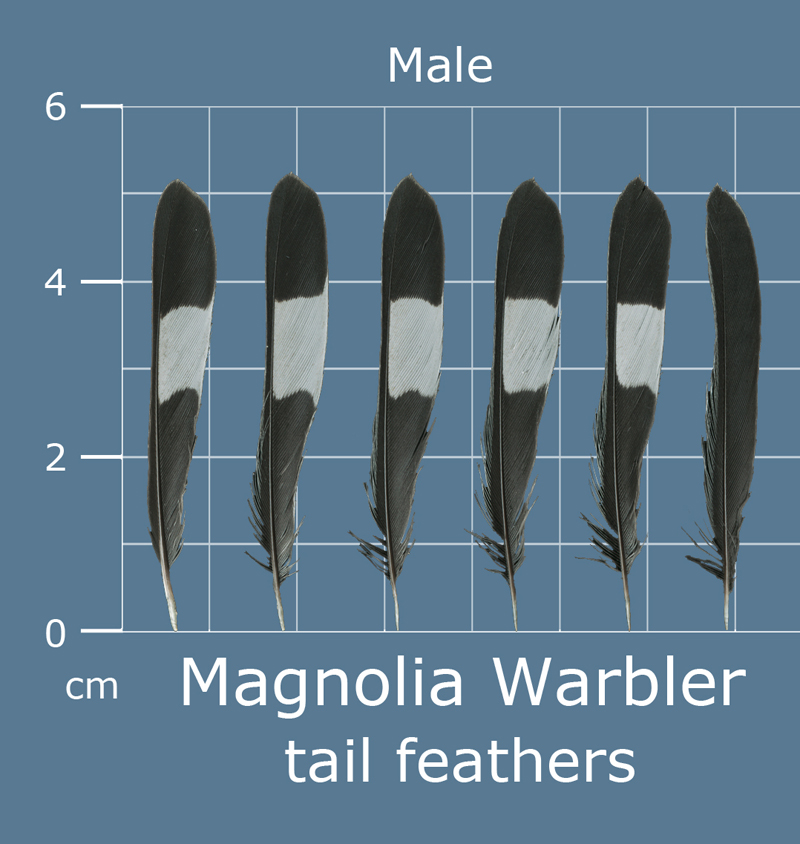
This was our first magnolia warbler, and it was such a charming little bird. We were able to determine that it was a hatch-year bird by which of its feathers had molted by this point. It's harder to identify the sex of juvenile birds, as males and females typically have fewer differences than adults do. The giveaway, however, were the tail feathers, or rectrices.
Copyright: USFWS
Male birds, even as juveniles, will have a large white splotch on their tail feathers, while females have a much smaller white area. Therefore, we were able to determine that our MAWA was a male.
Bird #3: Northern parula
Copyright: Cleber Ferreira
Like the magnolia warbler, the parula is also a warbler. Again, we were able to tell that this bird was a hatch-year bird due to which of its wing feathers had molted. This bird was pretty plump for a warbler, and we could see its large fat stores accumulated for the winter migration.
Bird #4: Tufted titmouse
Copyright: William Jobes
TUTIs are a pretty common backyard bird, and their call of "peter-peter-peter" is also pretty familiar. I had heard that they were a pretty feisty bird to try to hold, and that is not an understatement. They definitely have some sass to be so small. This individual was also a hatch-year bird, which we could tell due to its skull. Like human babies, baby birds aren't born with fully-developed skulls, and their skulls become more bony and reinforced over time. TUTI males and females are usually indistinguishable, so we were unable to tell the sex of this bird.
Bird #5: Swamp sparrow
Copyright: Luckybon
I'm not usually a big fan of sparrows, but this is a really pretty species. They are a rich, reddish-brown color on their heads and in their wings. We were able to determine that this bird was AHY (after hatch year). Again, males and females are very similar, so we were unable to tell the sex of this bird.
Bird #6: ....
Copyright: Cleber Ferreira
What a drab-looking bird, right? When I first saw it, my impression was some kind of sparrow. It didn't cross my mind that I was looking at the juvenile form of THIS bird:
Copyright: Andy Johnson
Colors, it turns out, can be very misleading. We had an indigo bunting! Juvenile males and females look like the brown bird pictured above, and males only grow in their bright blue feathers after they molt their juvenile plumage. Another way we could tell it was a HY bird was by its "gape."
Copyright: East Valley Wildlife Rehabilitation League
Gape refers to how baby birds have really wide beaks that are usually bright orange on the inside. This serves as a "target" for their parents to deposit food in the right place.
By this point, it was 10:45, and six birds was a pretty good day for us. We went to take down the nets and call it a day. The first set of nets went down, no problem. No birds in those. But then we heard the news from the other nets: thirteen more birds. We caught six birds in three hours, and thirteen in the last thirty minutes!
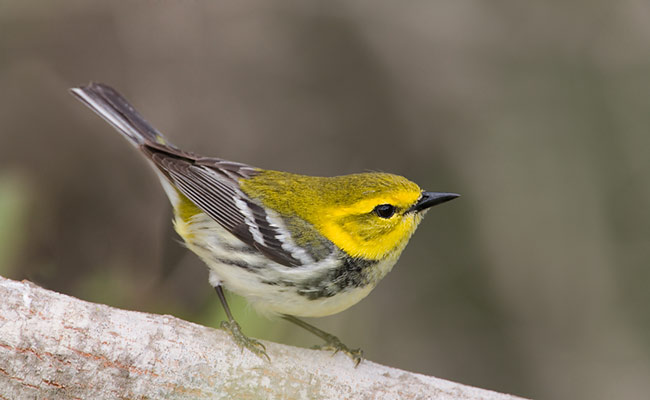
Bird #7: Black-throated green warbler
Copyright: Arthur Morgan
Another new warbler species for the day! We were able to determine that this bird was HY by the molting of its feathers and male by the coloration of its plumage.
Bird #8, 9, 10, 11, 12, & 13...
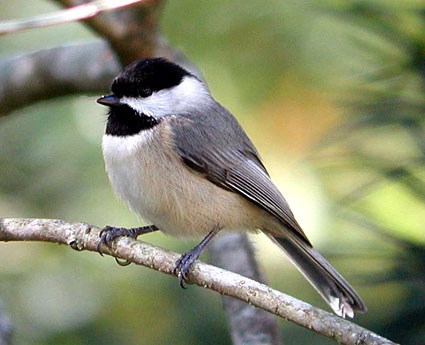
Copyright: Michael Drummond
Carolina chickadees! SIX of them! We practically caught a flock. All but one of them were HY, and we could tell again by the development of their skulls. Chickadees are nearly impossible to sex, so we were unable to determine the gender of these birds.
#14 & 15: More magnolia warblers!
Both of these were HY determined by molt patterns.
#16, 17, & 18: Tufted titmice
As if we couldn't get enough of their adorable little mohawks.
Last but not least, #19: Blue-headed vireo
Copyright: Jim McCree
This was species I had never heard or seen before, so it was a cool find. We were able to determine that it was HY by feather molt, and its sex was unknown.
Other birds hear and seen today:
Turkey vultures
Red-bellied woodpecker
Carolina wren
American crow
Northern cardinal
Pileated woodpecker
Wood thrush
Downy woodpecker
White-breasted nuthatch
American goldfinch
Rose-breasted grosbeak
Cedar waxwing
Blue jay
Woodpeckers can be hard to distinguish by call, but here are three common Ohio species in order of ascending pitch.
The pileated:
The red-bellied:
The downy:
That's all I have for this week; thanks for reading!





No comments:
Post a Comment